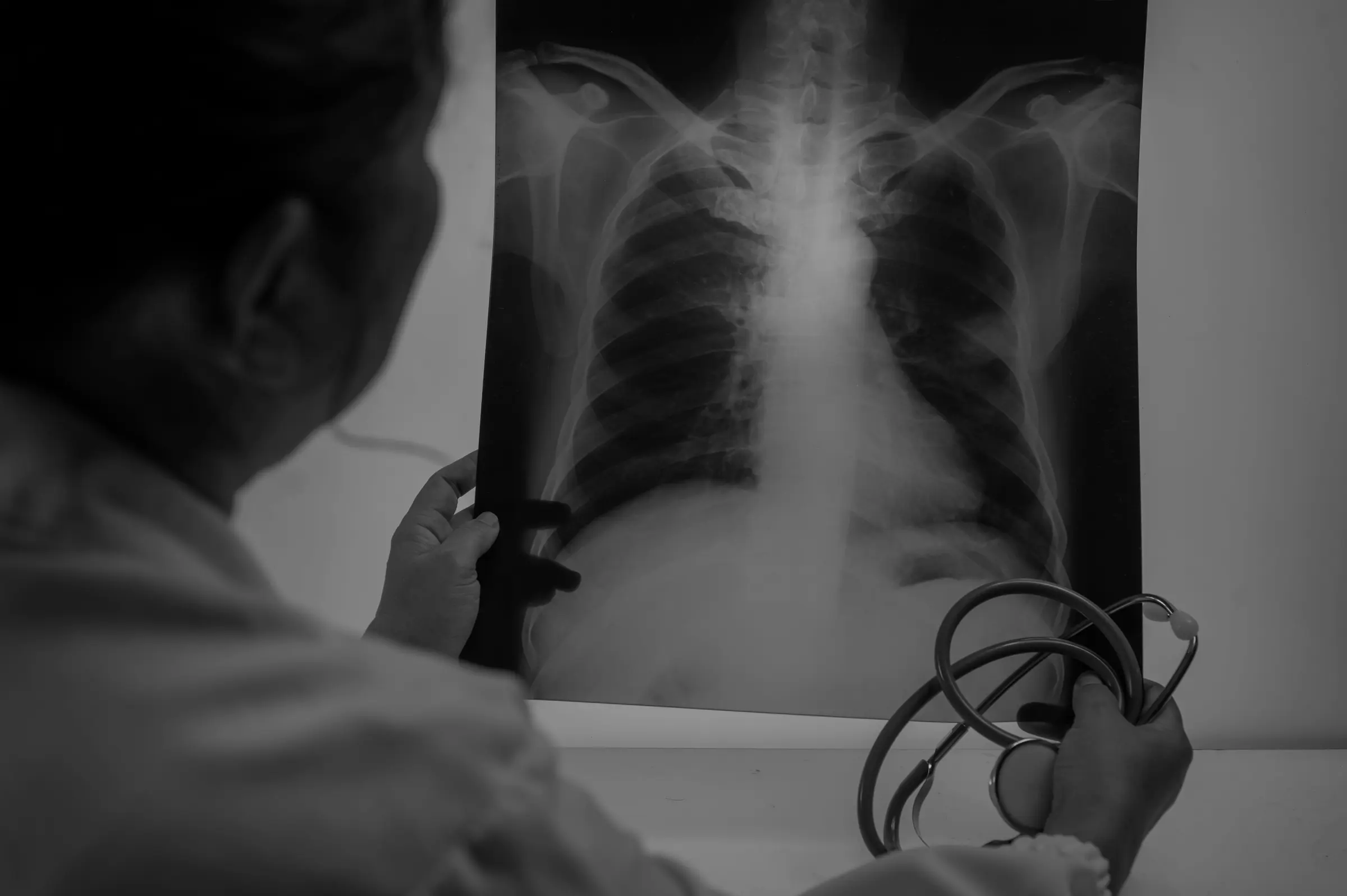
If you or a loved one worked in the trades, a plant, a shipyard, a railroad or a Navy engine room before 1980 and now has lung cancer, asbestos trust funds may owe you money, even if you smoked.
You may qualify if you:
A smoking history does not rule you out. Filling this out for a parent or spouse, or for a loved one who has passed away? Families can file too.
About two minutes: the jobs, the years, the diagnosis, and who is filing.
A real person looks at the answers and calls about next steps.
If it qualifies, we gather the work and medical records and file with every trust that applies. No court visits, and no fee unless you receive compensation.
For much of the last century, asbestos was built into insulation, pipe covering, boilers, gaskets, brakes and fireproofing. Cutting, sanding or simply working near those materials put fibers in the air, and workers breathed them in, often for years.
Asbestos is a known cause of lung cancer, and the cancer often appears decades after the exposure ended. That is why so many people are diagnosed in their seventies and eighties for work they did in the 1950s, 60s and 70s. Manufacturers knew about the danger long before 1980 and kept selling asbestos products without adequate warnings.
Many of those companies later went bankrupt and were required to set up trust funds to pay the people their products made sick. Billions of dollars have been set aside, and those trusts still accept claims today, including from people who smoked.
Work in any one of these before 1980 can be enough. Any type of lung cancer diagnosed in the last three years can count: non-small cell, small cell, adenocarcinoma, squamous cell or large cell.
Asbestos trust funds were set up to pay people with lung cancer from exposure at work, and many people qualify for payments from more than one trust. Compensation can cover:
Lung cancer diagnosis and treatment: surgery, chemotherapy, radiation, immunotherapy, medication, travel to appointments, and the care that follows.
Income lost to the illness and treatment, including time a spouse, son or daughter gives up to provide care.
The physical and emotional toll of lung cancer on you and your family.
If a loved one has passed away from lung cancer, the executor or next of kin may be able to file on the family's behalf.
Every case is different, and filing deadlines vary by state. Past results do not guarantee a similar outcome.
Yes. Smoking does not rule out an asbestos claim. Smoking and asbestos together raise lung cancer risk far more than either one alone, and the trusts routinely pay claims from people with a smoking history. It can affect the amount, but not whether you can file.
Yes. Many asbestos makers went bankrupt and were required to set up trust funds to pay people harmed by their products. Billions of dollars have been set aside, and the trusts still accept claims today. Many people qualify for payments from more than one trust.
Usually not. Most asbestos trust claims are filed on paper, with no trial and no courtroom. We gather the records and handle the filings for you.
You don't need to. Tell us where and when you worked, and we research the plants, ships, job sites and products from there, even fifty years on.
Yes. Many of the people who contact us are a son, daughter or spouse. Answer the questions for your loved one, and we'll talk with the family about next steps.
Often, yes, depending on when the diagnosis was made. An executor, next of kin or someone with power of attorney may be able to bring the claim on the family's behalf.
No. Claims are made against the companies that made and sold asbestos products, through their trusts, not against the Navy or the government, and they do not reduce VA benefits.
Nothing up front and nothing out of pocket. We're paid only if you receive compensation.
Asbestos lung cancer claims turn on where and when the exposure happened. We piece together the job sites, employers, ships and products involved, and file with every trust that applies.
No upfront fees and nothing out of pocket. We're paid only if there is a recovery.
Answers go only to the attorneys reviewing the claim. Nothing is sold or shared.
Free, confidential, and about two minutes. No fee unless you win.
See if you qualifyThis is an advertisement of Steppacher Law to investigate potential claims related to social media use and its impact on mental health and wellbeing. This webpage’s content is provided for informational purposes only by Steppacher Law. This site contains general information that may not be up to date, assumes findings of fact, and is for illustrative purposes only. A more detailed analysis of your particular situation would be required to obtain a better estimate of what you may be entitled to. There is no guarantee that a Court or Arbitrator would rule in your favor. This does not create an attorney-client relationship. It is not intended to provide legal advice. For legal advice, you will need to consult an attorney at Steppacher Law. Past results are not indicative of future results and do not guarantee any particular outcome.